Hiking Tips for Photography #406
 Hey Everyone! Hope you're having a great week. The weather has warmed up and it's a great time to get out and shoot. In this blog I'll talk about hiking and photography. Two of my favorite things. I love a good hike and of course I love photography. Now it is said that when the weather gets bad the photography gets better and I believe that is true . But what I have also noticed in my years of photography is that if you get off of the beaten path you'll not only get photo's that everyone else doesn't get but maybe even better ones. When you're out traveling we all want to get that shot that everyone else has got. Especially in National and state parks or waterfalls where everyone has the same shot. But I have found that if you hike out even just a little bit you can get a unique to you photograph of the same subject (say a waterfall) from maybe a different perspective or different angle that may make your shot even better than the shot that everyone else gets. Sometimes you have to hike in to a place to get a great landscape or wildlife shot. Being able to hike in safely and efficiently will make your photography of these areas even better. Now in this blog I will talk a little bit about photography gear but mostly I'll talk about hiking gear you should have with you when you're out shooting.
Photography Gear- There are lots of different types of photography gear you can take with you when you are hiking. But being able to keep
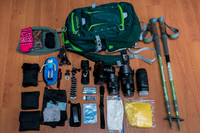
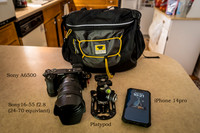 it lightweight is a plus. A lot of times if I'm just going out for a hike for exercise I always have a camera with me. When I'm out with my wife or Forrest the wander dog I want to keep it simple so I take a point and shoot camera with a 24-120mm equivalent zoom lens on it. But if I'm by myself or with other photographers and I'm going to say a water fall I'll take my trusty Sony camera with appropriate lens or lenses. Say maybe a 20-70 and a 70-300mm equivalent lenses that gives me a big range. I'll only take a wide angel like a 16-35mm if I know I'll need it. So that's camera covered. Other gear is a tripod if you think you'll need it. A Travel sized one, I have one that will support 17 lbs which is way more than I'll ever need. Also Extra batteries, Filters, cleaning clothes, and some sort of rain protection. I always have a shower cap that will cover up my camera if I
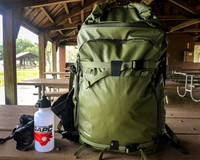 need it. Some sort of tool to work on tripods or camera mounts will also come in handy. I use a Peak Design camera clip on all of my backpacks to have the camera at quick access while I'm hiking. Then there is the backpack that I hold everything in. First of all don't get one that is too large. The bigger it is the more stuff you'll put in it and the heaver it will be. Make sure that you have a bag that when it's loaded down with all the gear that you're taking it is comfortable to wear. There are a lot of cheap camera bags that have lots of camera storage but really hurt when you put the loaded bag on your back. When I have my point and shoot I have a small Mountain Hardware day pack that I have used for quite a while that is built for hiking. It has a camera insert in it but lots of storage for an extra jacket or so. When I'm taking my big boy camera I have a Shimoda Action X-30 liter bag which feels like a backpacking backpack. It's the most comfortable camera backpack that I've ever used and it has extra room for all of the hiking gear I might need. Now for the meat of the blog Hiking Gear.
Hiking Gear- Having the correct hiking gear can keep you safe as well as making your hike easier. In hiking there are the 10 essentials that you should have with you when you're out in the wilderness. They are Navigation, Headlamp, sun protection, first aid, knife, fire, shelter, extra food,
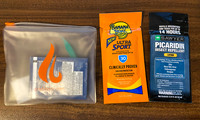
 water and extra clothes. Now I suggest if you're hiking 5 to 10 miles in that you have all of these things with you but if you're only going for a mile or so on a established trail you won't need all of these. I'll go over these things quickly. Navigation a simple trail map , either paper or on your phone but make sure its on your phone not the internet you might not have cell signal when your out on trail. A Headlamp can always come in handy for extra lighting for photography or help when you're coming back from that sunset shot you just got. Sun Protection in sun screen or hat or clothing that covers your skin can make a long hike better. Nothing is worse than sun burn. First Aid kit. I have a small first aid kit in all of my camera bags it includes bug repellent , band aids, foot care and that sort of thing , I keep it in a small zip lock bag. I also take some medications like ibuprofen, stomach relief, just a few tablets of each. A Knife, I usually have a small pen knife in my bag and hardly ever use it but it's small and lightweight. Fire. I hardly
 ever hike with this one but if I were somewhere I wasn't familiar a Bic lighter would be easy to carry. Shelter , I usually have an emergency poncho that I carry with me . It's small and lightweight and cheap but will keep you dry in a pinch. Extra Food I always carry a protein bar of some kind with me incase my blood sugar gets low. Extra Water. This is a biggie! Nothing worse than getting dehydrated. Take plenty of water and maybe an electrolyte powder to add to it to keep you hydrated. Extra Clothes like a light jacket.
Other things to think about. Comfortable shoes, I know this sounds silly to mention but people think that if you're going hiking that you need hiking boots and you don't. Most through hikers like the ones doing the AT (Appalachian Trail) use trail runners which is just a fancy tennis shoes. But they must fit well and have room in them because your feet will
 swell when you're hiking or just walking a lot. I try to take a trekking pole. When I was younger I used to think that these were just for old folks . How wrong I was. There are proven studies that says hiking with trekking poles is easier on your knees and you don't get as tired as with out them. The biggest benefit I found when using them is that when I used to hike my eyes were always down looking at the ground for a root or rock to trip over but with the hiking stick my eyes have come up and I see more than the ground just in front of me. Don't try to use your tripod as a trekking pole. It's not made to that and can easily break and they are a lot more expensive than a hiking stick. My trekking pole has a mount on top of it I can put a GoPro on and I can use as a selfie stick. Sunglasses can come in handy also especially if you're in terrain that is not covered like out west. And don't forget that big brimmed hat when out in the sun to protect not only your face but your neck also. Lightweight clothing is also a must .
 When in the summer time wear clothing that is light like polyesters not cottons that can absorb water and become heavy. There are many water wicking fabrics that are great for hiking. No jeans. Dress in layers . If it's cool in the morning you can bulk up and peel layers as the day goes on and warms up and just the opposite when it cools off. I often wear convertible pants ones that the legs zipper off to make shorts out of them and zip back on when it gets cooler. They make long sleeve cool shirts that can be used for sun screen but still be cool in the heat much better than sun screen if you ask me.
Being able to hike in the back country and photograph the lovely scenery and wildlife is a great privilege that you should take advantage of. So until next week Get out and Shoot!
Hey if you want to check out my photography go to my instagram account Max Stansell Photography there are over 2000 posts there. Here is the link
Max Stansell Photography Instagram Link
