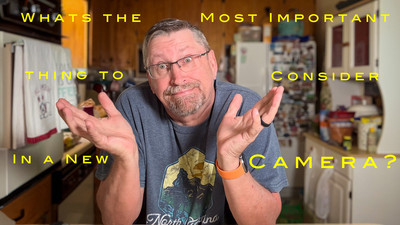
What is the Most Important Thing to Consider when Buying a New Camera #425

September 18, 2026  •  Leave a Comment

Hey Ya'll! Hope you're having a great day. This week I want to talk about purchasing a new camera and what is the most important thing the camera must have for you to buy it. The deal breaker thing. The make or break item that you must have to purchase the camera. I got this idea partially because I just bought a new camera and because of a podcast that I listen to that just explored the subject. The pod cast is the Digital Story by Derrick Story. He does a weekly podcast and has over 1000 of them. The podcast that I piggybacked off of  was The Most Important New Camera Feature. This is a great podcast and he did a poll of the most important items when buying a new camera. Please visit and listen to his podcast I think you will enjoy it like I do. So when I went to get a new or a (new to me) camera I had to figure out what were the things that were deal breakers for me. Now you know me and I have different camera systems for different things. I have my travel kit and I have my EDC camera (Every Day Carry) camera. I think that I may have different answers for different situations. If you have only one system it may be very easy to come up with your must haves. But everyone is different. So I will go over the obvious things that people look at when making a choice of a new camera.

Megapixels. For years the industry has been pushing Megapixels. Camera companies have been having megapixel wars for years. For some this may be the deal breaker. The more megapixels the better some may say. If your style of photography needs to really crop in like maybe wildlife or sports photography this may be the deal breaker. In the early days of digital more it did mean better. But now most cameras at any megapixel can give you great photo's and quality ones to boot. For me Megapixels was never a deciding feature and in my camera's now 26 megapixels is the highest I have. Where 40 and 60 are the norm what I have is very small.

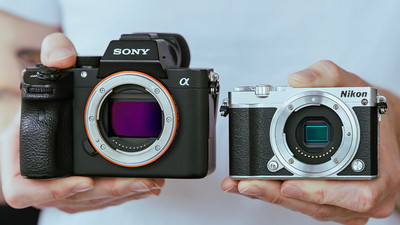
Camera Size. Some want bigger and some want smaller. Depending on what type of photography again. Larger lenses a larger camera kind of balances out the weight. But if you're using smaller lenses or doing photography that you want to be nimble and mobile and able to walk a lot a smaller camera might be what you need. For me I like the smaller cameras . It can be very high on my must have items. When I was purchasing my travel and EDC camera's it was very high on my must have's. It was the reason that I got my Sony Crop sensor camera was for the size when traveling in my van the MAV (Max's Adventure Van) the smaller the better. And my EDC camera is was high on the list but not the highest.

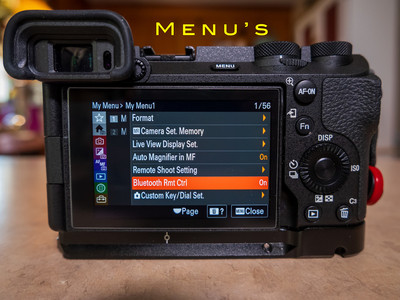
Camera Loyalty .  This is a biggie for some folks. You have Canon folks and Nikon folks and they shouldn't even think of another camera. Even saying the other company's name is forbidden. LOL But there is something to it. You get used to the buttons and dials because they don't change much from model to model. The menu's is another big reason . You know where all the items are and they are familiar. And no one likes change. But the biggest reason may be the lenses you already have. Thats one reason I picked Sony for my Travel Camera. I already had quite a few lenses that can be used on the new camera so sticking with my camera brand was a choice I picked. I was looking at Fuji but Sony won out because of the lenses I already had.

High ISO Performance. This is another item that camera companies tend to push and in the early days of digital you could get some really noisy photos in low light. But sensors have come a long way . They do make sensors that are fantastic in low light. If you are in to low light photography like astro photography or shooting in low light situations this may be your must have.

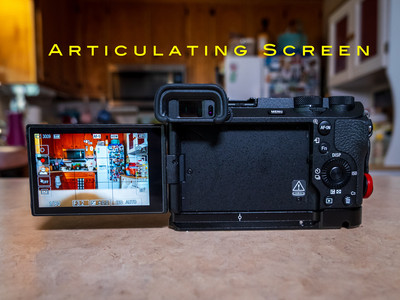
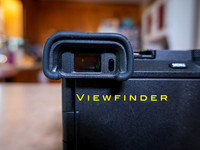
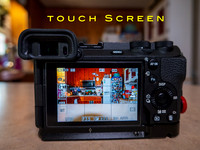
View Finder vs Back Screen. If you're like me a view finder is a must have and the primary reason I replaced my EDC camera. My old one didn't have a View Finder and I needed one. It was the deal breaker. I wanted a compact camera that had a viewfinder and that is what lead me to the Leica I recently purchased. For some people this is a deal breaker. In bright conditions using a back screen can be tough but a viewfinder works all of the time. For me this has become a deal breaker. What about a flippy screen or a fully articulating screen. Me I like the flippy screen and not the fully articulating screen. But for some the fully articulating is a must have maybe because they do video and they can film their selves with the screen turned around.

Camera Stabilization . Modern cameras can be more stable by either using in body stabilization (IBIS) or by using lens stabilization. This is particularly useful if you are into video. I think these would be a must if your camera is mainly a video camera. But for photo's it can be very useful also. For me some sort of stabilization is needed. In my travel camera it is IBIS and in my EDC camera it is lens stabilization.  Some sort is a must for me and most cameras offer this.

These are just a few of things that can be deal breakers. For a lot of people how a camera looks can be very high on the list. Sometimes it just the "Bling" of it. Other times it's how the camera operates. Does it have a retro look? Does it have lots of dials and buttons like analog cameras? Some people like this and others like more of a digital feel. Some folks don't like to use a view finder and only the back screen . It's just how people like to use their camera. It's like asking what is the best camera. There is no correct answer. Everyone is different and everyone likes different things. What are some of your deal breakers? Let me know. Until next week Get out and Shoot!

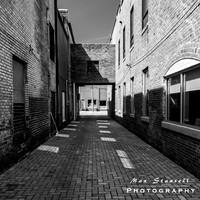
Hey if you want to check out my photography go to my instagram account Max Stansell Photography there are over 2000 posts there. Here is the link

 Max Stansell Photography Instagram Link


Godox iT 32 Flash Review #424

September 11, 2026  •  Leave a Comment

Hey Everybody! Hope you're having a great week. Me? Not too bad I've got some new gear to talk about and pretty excited about. It's a small little flash. The Godox iT32 flash. Now I've been using strobes and flashes for years and have had everything from Studio Strobes to hand held flashes and of course on camera flashes. When used correctly they can really make a photograph.  As photography is the capturing light knowing how and controlling that light is really important and I think everyone should know how to use flash. When I started it was all manual and you really needed to know how to meter an adjust the light accordantly . But with modern TTL (through the lens) metering the flashes do most of the work for you. Now on camera flashes are okay they can be used for fill flash and if you can move the head you can bounce the the flash off of the ceiling or off a wall but the real advantage of flash is being able to get the flash off of the camera . To do this you need a trigger to send the signal from the camera to the flash. And if you had more than one camera brand you needed a different flash for each brand because their hot shoes on the camera were different. This is where the new Godox iT32 comes in.

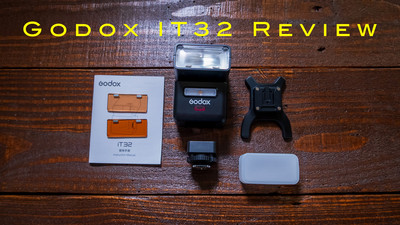
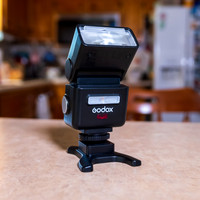
The Godox iT32 is a small flash. It's not intended to be flash you use for a big model shoot or to shoot a wedding although you could use it in these situations to a point. I have lots of flashes and this one is the smallest one that I own except for a little flash I got with my Leica. Let me go though some of the specs of this flash. It is a TTL (through the lens) metered flash which makes it easy to use. It has a touch screen control panel and even comes with a screen protector in the packaging. It can be used in manual also if that's the way you like to control your flash. It has a built in battery. Which I really love I don't have to look for AA batteries anymore to use this flash I can just plug it into a USB C charger and I'm good. It has a magnetic face so it will take Orange filters that are magnetic to adjust for white balance . These filters come with the flash. It has a magnetic stand that comes in the package that you can use to connect to a light stand or just sit on a table. And the best part it comes with a remote trigger that hooks to your camera. Let me tell you how this little flash works.

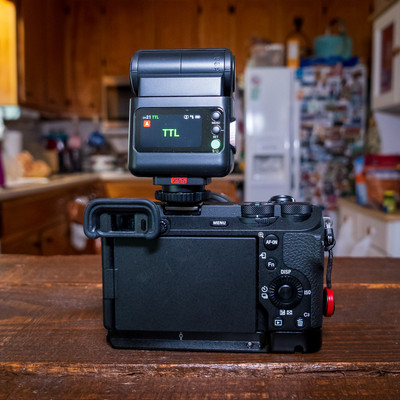
First you buy the flash unit. It's a generic unit that can be used with any brand of camera. You get the flash head , defuser, filters , stand and charging cable all for about 80ish dollars. Then you buy the trigger for your camera for about 20 bucks. So for me I got a Sony to fit my Sony cameras and a Leica one to fit my new little EDC camera. Now the magic ! The trigger and the flash head magnetic together and you can hook to your camera like a regular on camera flash. But when you want to get off camera you just pull them apart and the trigger stays on the camera and you can either hold your flash in your hand and it works! This is fantastic but that's not all. If you have a trigger on another brand of camera you can just put the head on the other camera's trigger and it works with that camera. So you have one flash for two different brands of camera's. This is pretty fantastic! But that's not all. It can be a trigger for other Godox flashes if you have them. I really like the Godox line so I have quite a few of them if I wanted to use it as a trigger. It can also be controlled by another Godox trigger like I would use for my more professional strobes. So I could use it for say a hair light. Now that's pretty awesome! It can also shoot in High Speed Sync for those who like to shoot ant a higher shutter speed than your camera's flash sync speed. So if I had a Canon, Leica, Nikon , OM System, Panasonic and Sony I would just have to purchase one flash at 80 bucks and just different triggers at 20 bucks a piece . I can remember when a flash for a Nikon cost over 300 dollars if I wanted one for a Canon it would be another 300 dollars. But now I could get one flash and trigger for all the cameras mentioned above for less than one of the Camera Proprietary flashes. Thats pretty cool. Now if Godox does this for their larger flashes this would be ground breaking. But I like the way they are thinking on this smaller flash. If you like to use flash I would recommend using one of these flashes. They are great for around the house doing product photography and and out and about street photography if you're brave enough to use them in public. (not me) LOL

So until Next week Get out and Shoot some flash!

Hey if you want to check out my photography go to my instagram account Max Stansell Photography there are over 2000 posts there. Here is the link

 Max Stansell Photography Instagram Link


Using Your Camera's App #423

September 04, 2026  •  Leave a Comment

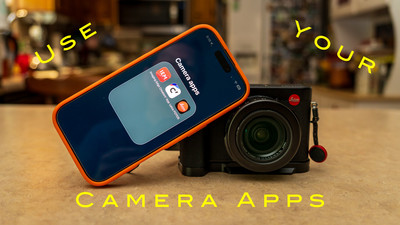
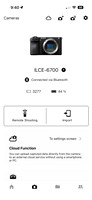
Happy Friday Everyone! Hope Ya'll are having a great week. This week I want to talk about something that photographers don't talk about or use that much. Their Camera's phone or tablet App. Now I admit that in the past theses apps were just an after thought of the camera companies and didn't work well at all. They were really more frustrating than anything else. Now I have used Nikon's older app and Canon's and of Course Sony's and now Leica's app. They have come a long way since I first tried to use them in years past. Maybe the connectivity of phones and camera's have gotten better. Maybe the camera companies finally figured out that photographers really wanted the apps to do what the camera companies claimed they Screenshot would do. But either way they work a lot better and if you're not using them you're really missing out on features that your camera can do for you. They use Wifi and Bluetooth to connect to your camera and can do all kinds of things. Let's see what they can do.

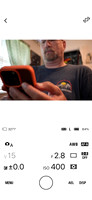
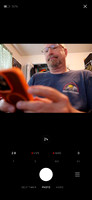
Remote Control. One of the coolest things they can do is remotely control your camera . Depending on your camera brand you could change Screenshot your aperture , shutter speed, iso, focal length and of course the shutter button. At a minimum you can use your phone as a remote shutter release for long exposures. You may even be able to do a time lapse from your phone depending on your camera if that is possible or not. This is a cool feature even if you only use it as a backup remote incase yours breaks or you forgot yours.

Change Settings. Depending on your camera brand and camera you may be able to go through all of your settings on your camera and change them from your phone. If your camera can do this it's an awesome feature that you can easily navigate from your phone. But it does depend on camera model and camera company on how much you can change.

Cull photos on phone. Being able to see photo's on your phone or tablet that are on your camera without downloading them Screenshot is fantastic. Imagine shooting all morning and going for coffee or lunch . Grab your phone or tablet and see all the photo's that you took. You can mark your favorites and then at the end you can download only the ones you marked and then send them to Lightroom to edit. All without hooking your camera to anything. My Leica Foto's app can do this and I only download the ones I want to my phone or tablet saving room on the mobile device. Don't know if all apps do this but I suspect they can do at least some of it. 

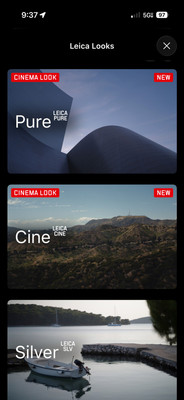
Screenshot Photo styles and Luts. Again depending on your camera and brand you may be able to download photo styles and/or Luts to your camera to use. We get the standard styles like landscape, portrait, monochrome but being able to download specific film simulations or different styles can really add to your creativity when shooting. Having those at your fingertips like profiles in Lightroom in your camera to use. This is really cool.

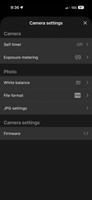
Firmware and Updates. Some of the apps can check your firmware of your camera and even update without using a SD card or hooking up to your computer following directions from a PDF and maybe even having to download software just to install firmware into your camera. We don't have to do this with our phones why would we want to do this with our Cameras? It just makes sense to me this should be on all apps and camera's but it's not. Like always depending on the camera company or your model of camera will your app be able to do this.

GPS. Global Positioning System is a way to geotag your photographs. This is the feature that I have been using the most for my Sony camera's in the past. With bluetooth your camera talks to your phone and puts your coordinates to your photograph. Then in Lightroom you can use the map feature and see where your photo's were taken. This is an awesome feature. Sometimes I can see an older photo and not know where it was taken but with this feature I can see anywhere in the world I took a photograph. This can be used to go back and maybe getting even a better photograph. I love this feature. With older Sony's I had to physically go and hook up the bluetooth at the beginning of the day but with newer camera's after you initially set it up It automatically does this when you turn on the camera which I love. Same with my little Leica D-Lux 8.

Store Camera Settings. You can save your camera settings on your phone and use them at a later time. Maybe you had to reset your camera to Screenshot factory settings for some reason. Instead of going through every menu item in your settings you can go to your saved settings and download them back to your camera with the click of a button. How awesome is that. Maybe you have a backup camera and want the same settings on that camera with the click of a button after you've connected your backup camera to the app. Nice. 

As you can see your camera's app can make your photography life easier. Whether using the remote , culling , photo styles, firmware updates, GPS or storing settings. Make sure to download and check out your camera's app it may be able to help you in your photography. Until next week Get out and Shoot!

Hey if you want to check out my photography go to my instagram account Max Stansell Photography there are over 2000 posts there. Here is the link

 Max Stansell Photography Instagram Link


Shooting Micro 4/3 Camera Sensor #420

August 28, 2026  •  Leave a Comment

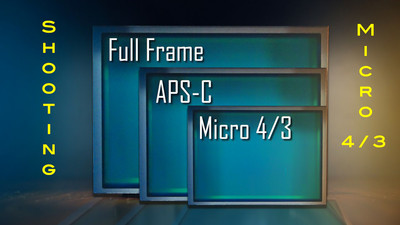
Hey Everybody! Hope you're having a great week. Me? Pretty good. Today's topic is shooting Micro 4/3 sensors. This seems like a weird topic but I've shot 2/3, type 1 or 1 inch, APSC and Full Frame and whatever a iPhone is. Oh I just looked it up tiny! 1/1.23. Now I've shot all of these and have gotten great photo's out of all of them. Well what's the deal about micro 4/3 sensors ? Well I think that the Micro 4/3 sensors have gotten a bad rap over the years. Only a couple of companies have used them exclusively . Panasonic and Olympus or OM systems now. In the photographer's eye they have been looked down on from the full frame sensors and the APSC sensor folks. But why? We like the shots we get from our iPhone and that's a tiny sensor. So why is the shame put on Micro 4/3. Is it because of the word micro? Does sensor size matter? Well Yes it does . To a point.  It's just physics. The larger the sensor the bigger surface area to collect light. The Larger the sensor the better it is in low light. Thats the difference. In low light situations the shadows will show some grain or noise. In years in the past that was a problem but "now a days" with de-noise programs it's not as much as a problem.  One of the advantages of smaller sensors is smaller lenses. Yes physics again. so a small sensor like what's in your phone has tiny lenses like on the back of your phone. Full Frame lenses have to cover the size of the large sensors so they are much larger making them very heavy depending the glass and the construction of the barrel of the lens. 

I currently have cameras with full frame and APSC(Crop sensor) the next size down is Micro 4/3 and then the 1 inch or type 1 sensor. My last EDC (every day carry) was a Canon G7XII which had a 1 inch sensor and I had no problems with it. I've gotten some great shots with it so size really didn't matter. My new EDC camera is the Leica D-Lux 8 which uses the Micro 4/3 sensor size. And I must say it is Fantastic even in low light. Is it as good in low light as my full frame sensor camera? No, but it does what it's supposed to do shoot great photo's in a small package. If I get a little bit of noise in the shadows I don't really care because that's not the most important part of the photo usually. Using just a little of de-noise and you won't be able to tell. Really unless you're pixel peeping you won't notice anyway. I get great color great sharpness out of this sensor. Olympus and Panasonic know how good these sensors are or they wouldn't be using them .  They are great for not only photo's but also video as Panasonic is known for its video capabilities of their cameras and are often chosen over larger sensor cameras.

Over the last couple of weeks I have been shooting micro 4/3 sensor exclusively on my little Leica camera. Before then I haven't really had any experience with the size. After shooting I can say that it is a great size sensor and I can't really tell the difference between Micro 4/3 and Crop and even Full frame sensors. I think the big difference would be at extremes. Shooting in very low light or from very far away and you have to crop in a lot . Like in wildlife or sports. Which I don't shoot too much. In photography there are always compromises there are no perfect cameras or sensor sizes. Micro 4/3 cameras are very popular with birders and wildlife photographers because the cameras are smaller and the crop factor of the sensors. For example a 100 to 400 lens is like a 200-800mm lens due to the crop factor of the sensor making it great for long distance photography like sports and wildlife. The sensor size is also great for street and urban photography . Due to the size of the sensor the cameras and lenses are smaller due to the size of the sensor which makes them more portable and less threatening to people you might be photographing because they don't look so big and scary. But I believe they can be very professional. Brands like Olympus now OM Systems and Panasonic are camera's that use this sensor size and should be considered seriously when choosing new cameras. They are well built and smaller in size to the full frame Nikon and Cannon and Sony Cameras. If you're older in age like I am I think they are a great choice just for the size and portability of the systems.  So my advice is not to turn your nose up at these little sensors. They are a great option when choosing cameras and should not be counted out. Look at the way you shoot and see if you really need that full frame camera that the salesman at the camera store is trying to sell you. I bet for most of us you don't need it. I know I don't. So until next week pull out that little camera and start shooting! Get out and Shoot!

Hey if you want to check out my photography go to my instagram account Max Stansell Photography there are over 2000 posts there. Here is the link

 Max Stansell Photography Instagram Link


I was on the Struggle Bus! #426

August 21, 2026  •  Leave a Comment

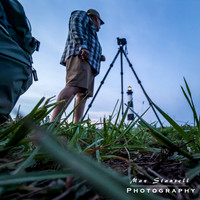
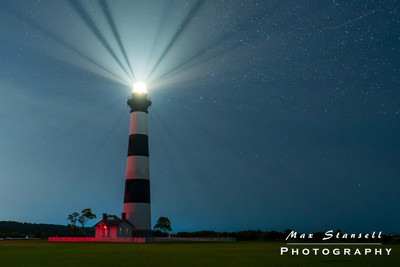
Hi Ya'll! Hope you've had a great week. Me? Not too bad I've been out and about taking photo's the last week or so. So I can't complain. Thanks for asking. LOL This week I want to talk about something that all photographers go through. Being on the Struggle Bus. What I mean really struggling with a shot or your camera or both. That happened to me a few days ago and I thought that I would share. It's not always Rainbows and Unicorns when we do photography and I want to share the bad and good of being a photographer. My Photography wingman Robert had an idea of a shoot. Now this could be good or bad but usually pretty good. The Weather Lady in our area was talking up the Perseids Meteor Shower that was getting ready to happen. Along with no moon this was an opportunity to take. So he planned a trip to Bodie Island Lighthouse that is a good drive from our little town to the Outer Banks of North Carolina. But that was Okay. Any excuse to go and take photo's is a good one as far as I'm concerned. Along the way is Alligator River Wildlife Refuge and we decided to take a quick drive through to see if we could see some wildlife and photograph. Neither one of us is a wildlife photographer so if we
saw anything that would be a plus. I was all in. Robert took the day off and we decided to get a hotel because it would be so late when we finished and being tired and driving at night especially through this part of rural North Carolina can be dangerous with small roads and deer crossings. We have had club members that have hit deer and we even had a deer encounter when we did our New Years shoot this year when a deer ran into the side of our car. But luckily the deer or the car didn't sustain much damage. So we were all set. I got my gear together and I had a plan. I was going to test my new travel kit against my full frame setup and see how they compared. 

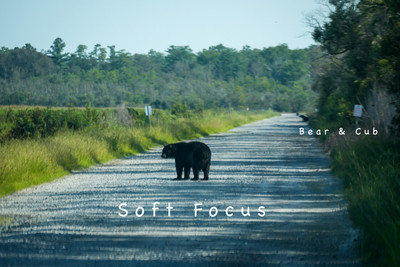
We took off early afternoon and headed to the coast. We always have interesting conversations when we travel that can range from photography to music to movies almost anything and a lot of Dad Jokes. It was a very hot day as most of the days have been lately. We arrived at Alligator River Wildlife Refuge after a couple of hours drive and got out our cameras and started driving the gravel roads. We came to our first intersection and there was a truck parked there. We pulled up beside and in the distance on the road I could see a momma bear and her cubs playing. They were out of reach for my 100 to 400 full frame equivalent lens. We talked to the guy beside us and he said that about 30 yards in front of us just off the road there was another bear. We couldn't see him at first but after a few minutes he meandered out onto the road. Looked at us and started down the road away from us stopping to look around poop and do bear things. I was snapping away. I was still sitting in the car and was shooting through the windshield . Robert was out of the car shooting. We shot until he slipped into the brush again. Well that was easy we were thinking. I had my camera set on one of my custom settings on my new Sony A6700 set for wildlife .  Hard to tell by the back of the camera how good the images really were but we were happy. We came saw a bear within 15 minutes took the photos and were on our way. Job well done ! Well that's what I thought. When we finally got home I downloaded the photo's to the computer imported the images and started looking at them. They were soft. And they were shot in JPEG not RAW so I couldn't put them through image sharping software to try to recover them. So I had a lot of out of focus images of a bear. When using a new camera . Even if you've got things set up double check. I didn't. I would have got better shots if I had got out of the car also. I was shooting through the windshield over the hood of a very hot car and I'm sure the heat waves were coming off of the hood giving me soft photo's. My camera was tracking the bear using AI focusing but I think shooting over that hood and through a tented windshield got the best of me. Lesson Learned.

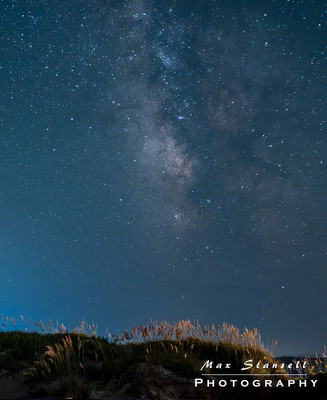
After that shoot we went the rest of the way and made it to our hotel where we checked in. It was still to early to go to the Lighthouse so we decided to go eat then go to the lighthouse. While on the way we forgot to pick up some waters or Gatorade or something and after we were there we were and it was too far to just go for a drink. We pulled out our phones and figured where the best place would be to see the meteors and we set up. There were lots of people there and it wasn't dark yet. We wanted to get some blue hour shots and then wait for the meteors to shoot them and then do a composite photo with the lighthouse from blue hour and all the meteors from later in the night. Well we wert the only ones that saw the new about the meteor shower and lots of people showed up and kept showing up through the night. That meant car lights that shown across the lighthouse. And people everywhere with flashlights walking right in front of you. It was very frustrating trying to get a shot without noise pollution from some car or person. To make things even worse the mosquitoes were very hungry and swarming. I put on a long sleeve shirt and a head net and they were relentless and hungry. They feasted on us. Today is about a day and a half after the shoot and I am very itchy and have lots of bites on my legs. Robert is the same. So that added to the frustration of the people and all of the light pollution. About 1030 or so we decided to pack it up and go to another location. We went to a beach which is really just across from the lighthouse can't remember the name but it was much nicer there. The mosquitoes were almost non existent compared to the lighthouse. We took some shots toward the ocean and you could see when the waves crashed the florescent things in the water that made the waves glow. Very cool. I was having problems focusing. I was watching Robert dial in his focus but I couldn't get mine going. I know it was a setting . So I just focus on a light at the shower house and used that to do a hyper focus shots. I tried to look for stuff in the menus but they are so big I couldn't find stuff and I was really on the struggle bus. My camera seemed to be working good but I couldn't see what I was doing on the screen. What I had forgot to do was go over all of the things I would need to do for astro photography. And I forgot some steps and settings that would have made it super easy. Luckily I did get a couple of shots of the milky way that are decently sharp. So after the shots from the Wildlife Refuge and the lighthouse and the beach I had a handful of good shots and a lot of mosquito bites.

The next morning we headed to a restaurant that we have been to before and had a good breakfast. We then went to Plymouth NC and walked around the town taking photo's . I was finally in my wheel house and got more keepers than the last two places we went. What's the moral to this story? Prepare and check settings before going out on a shoot. It's not just the gear list you need to check its the "how to do" stuff that you need to check on. Thats where I failed. I didn't double check my settings I didn't go over procedures to focus when doing astro photography. I've only got a few shots to show for a full 24 hours of shooting. It happens to the best of us and I'm no exception. It was a good lesson learned but I still had a great time being out and shooting. Even though I don't have anything to show for it. So until next week! Get out and Shoot! 

Hey if you want to check out my photography go to my instagram account Max Stansell Photography there are over 2000 posts there. Here is the link

 Max Stansell Photography Instagram Link


Subscribe
RSS
Archive
January February March April May June July August (4) September (4) October (5) November (4) December (3)
January (5) February (4) March April (2) May (1) June July August September October November (3) December (2)
January February March April May June July August (1) September (1) October (1) November (1) December (1)
January (1) February March April May June July August September October (3) November (2) December