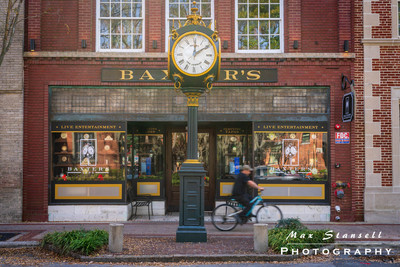
Bad Weather, Good Photo’s #407

May 01, 2026  •  Leave a Comment

Too Much RainToo Much Rain Hi Everyone! Hope you're having a great week.  I have been taking pictures for a long time now and I have come to the conclusion that when the weather is bad the photography can be very good. Shooting in rain or snow can be a perfect place to get some great photo's that your contemporaries miss because they stay inside and out of the weather. Some of my best photo's have been in the rain or the snow or during inclement weather. The hardest thing to do is step outside when the weather isn't perfect. Stormy and cloudy skies make perfect backdrops for moody landscapes and even black and white photo's.  As photographers you want that cloudy sky. Its much more impressive that a blue bird sky with no clouds in it . Shooting in the rain is also great because everything is wet. You get all sorts of reflections and the leaves and vegetation really pops. Shooting in the snow makes everything look fresh and clean and ordinary objects really stand out. But getting out in the weather does come with its difficulties . You have to protect yourself and your gear. Here are some tips on how to do this.

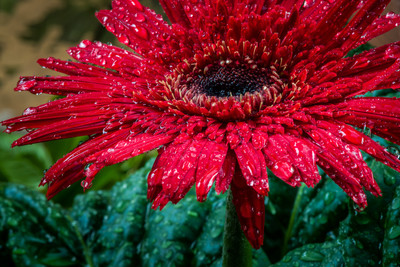
Protecting Yourself. If you're going out in the rain you need to keep dry. Getting wet will lower your body temperature and could lead to hypothermia.  You don't want that. A good rain coat and hat and even some rain pants can help in this. But remember that sometimes wearing a raincoat that isn't properly ventilated can result into profuse sweating underneath the coat. So buy a good coat and bring plenty of Rain Flower 1Rain Flower 1
water to drink. In the cold rain you might not need as much layering underneath the rain jacket as you would say in a snow storm. Rain jackets tend to keep the warmth in.  If you wear glasses like I do you know that the first rain drop always lands on your glasses so keeping clean dry microfiber cloths handy is a must. In snowy cold weather layer up. Start
with a good base layer (long johns) that aren't cotton. Cotton can absorb moisture(sweat) and become heavy and cold. Then start adding layers. Jackets with a good wind breaking ability is a plus. The wind can really cut though you when its cold outside. Gloves are also a must to keep your hands from freezing. There are special Photography gloves that the fingers slip on and off so you can make adjustments on your camera then cover up your fingers again. Good insulated footwear is also a plus. If you're like me when your feet get cold that's it you're done for. A good insulated hat of some sort will help keep the heat in.

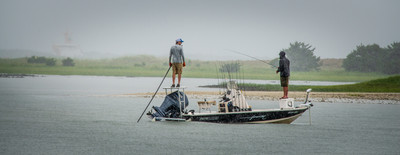
What Rain Im Fishing!What Rain Im Fishing!
Protecting Your Gear. If you're like me you have a lot of money in your camera gear. Protecting it is important. Keeping moisture out is the key. Most modern cameras are very moisture resistant with gaskets and seals built into the camera body's and lenses. Some are better than others so I don't like to take a chance. When in the snow I don't worry about moisture as much as I do in the rain. Although the big fat snow flakes tend to not be as cold and melt on contact with your camera more than the small tiny flakes do. A simple keeping the camera under your coat before you shoot is usually good enough.  You can buy covers that protect your camera that are special made to protect them. But I find one of the biggest cause of moisture when in the cold is when you come inside to a warm moist house. Water can condense to the outside and inside of your camera . To prevent this from happening its a good idea to wrap up your camera in your coat or leave in your camera bad for a half hour or so before opening it up to the elements in your house giving it time to warm up thus preventing condensation. When shooting in the rain I like to protect my camera with some sort of rain protection. If its just a light rain or drizzle I just do the under the coat thing and don't worry too much about it but when it starts to rain more steady I break out some sort of rain protection. You can buy special maid covers that are made for your camera brand and some generic ones. The Generic ones cost about 5 bucks and work well. I use a shower cap that is easily stored and can be put on the camera very quickly keeping the rain out of it. I bought about 100 of them for 5 bucks off of Amazon. They work great for
what I do. When working in extreme heat be carful from going out of a nice cool air conditioned house into the hot steamy weather the same condensation can happen to your camera and your lens can fog up . To prevent this let your camera warm up just like in cold weather for a half and hour or so before use. When shooting in the cold your batteries tend not to last as much and deplete prematurely . To prevent this keep extra batteries in your pocket close to your body to keep warm when you change batteries put the used battery back in a warm pocket and you will see later that the charge has come back when the fresh battery gets cold and week. You can swap back and forth quite a bit before the batteries are truly out of charge.

As you can see shooting in inclement weather isn't too terrible to manage and you can get some great photo's from it that no one else is getting. So if you have a photography trip planned and it starts to rain don't cancel your trip you might get the best photo's ever. So until next week Get out and Shoot!


Shoot for Yourself Not Social Media #405

April 24, 2026  •  Leave a Comment

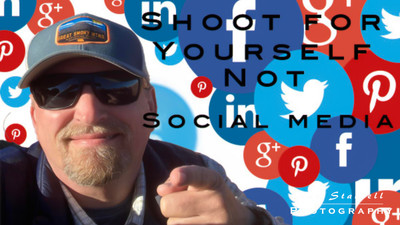
Hey Everybody! Hope this week had found you healthy and happy. Me? Pretty good. This week I want to talk about something I certainly have been guilty of . Taking photographs for social media. Taking photographs just for social media and everything that comes with it. I used to call it feeding the gram.  Now I still like to post to Instagram but I try not to take photo's just because they will get likes. Now I know everybody likes to get likes and nice comments about their photography but if you look at these sites al of the photos' have that same look to them. Do you know why? Because we're looking at these sites so much scrolling through other peoples best shots that we start to think that that's how photography is suppose to look like and we try to copy those styles. We even think that our photography is lacking because we can't take photo's like them. We think that they are so talented photographers and we are not. But we forget that they like us are just posting their best photographs and they may have taken 500 shots to get that one good one that you are looking at. I've heard it said that you're looking at the Algorithm's Eye and not your own. Your looking at what the computer said was a good shot and not what your own artistic eye is telling you.

Try to remember back to when you started your photography journey. Why you love taking photo's. What got you started? I wasn't because you would get likes on Instagram or Facebook. If you're like me the internet was far from being invented and you started from the love of it. We took photo's of things we loved or places so we wouldn't forget them. We tried to steal a moment in time by freezing it in a photograph. At least I did. I had no dreams of becoming a famous photographer or a journalist of any sort when I started taking photo's . I wasn't even on the yearbook staff in High School even though I walked around with a 35 mm SLR. You must remember what it was that drew you to photography and try to get that feeling again. Shoot for you. If you do this you will become an artist again and not a copy cat of other peoples vision.  This is easier than said. I'm in the process of trying to do that again. I try not to look or get caught in the scrolling of instagram but I can't help it I do find myself doing it almost every day. I still post to Instagram my Social Media of choice besides Facebook which I don't post photos too often. Beside my website which this blog is on Instagram is where my photo's live. So I'm in a sticky wicket as it were. Trying not to follow the crowd and post photo's like everyone else's and post original things that I like. I think social media is a good thing but too much of a good thing can be bad and social media tends to be this especially for photographers. 

I'm hoping to start a new chapter of my photography life with taking photo's of what I like taking .  Travel fb-artfb-art and Landscape. With the MAV (Max's Adventure Van) as my home base I hope to travel to different places and document as I go. I'll be posting to Instagram and Facebook and hopefully getting more recent photo's to my website. 

Hey if you want to check out my photography go to my instagram account Max Stansell Photography there are over 2000 posts there. Here is the link

 Max Stansell Photography Instagram Link


Fixed Lens Cameras #404

April 17, 2026  •  Leave a Comment

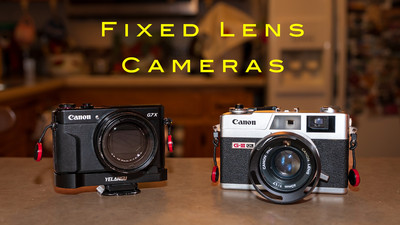
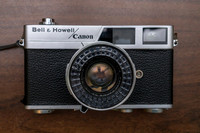
What's up Everybody? Hope you're having a good week. Me? Not too bad. Thanks for asking. I've had a small Kidney Stone Surgery that went pretty well and I'm hanging out this week trying to catch up on some blogs and maybe start planning some trips with the MAV (Max's Adventure Van). This week I wanted to talk about a subject that isn't talked about a lot. Fixed Lens Cameras. A Fixed Lens Camera is a camera that has a lens that is attached and cannot be removed. We get so caught up in our very expensive Mirrorless cameras that have interchangeable lenses that we sometime forget about these cameras and how creative and fun they can be. They have been around almost since the beginning of photography and most of us took our first photo's with them. But since the modern phone has come out over the last 10 years or so they have lost a little of their status in the camera community. But I think that is wrong. There is something about having a 20170107_Brownie Memories_013-Edit20170107_Brownie Memories_013-Edit dedicated camera in your hand that you can't surf the web or take a phone call on or don't have to be connected to the internet. Now some of these camera's are making a comeback like the Fujifilm X-100 series of cameras that have a fix focal length Lens attached to them and almost have a cult following. And others like the Canon G7X series of point and shoots that have a fixed zoom lens attached. These are fantastic cameras and other manufacturers like Sony, Ricoh and even Leica also has their fixed lens camera's too. I have film cameras with fixed lenses and my first digital was a fixed lens camera and they worked great. 

    My first experience with photography was with a Kodak Brownie that my mother had and I used it to take family photos when we went on vacation or to the beach. It had a viewfinder that I could look down at waist level and one that I could bring to my eye to take photographs. This was back in the late 1960's. My family then got a Polaroid Camera that I used a little with a fixed lens they were cool because you could get the photo right away and didn't have to send to the drug store to get prints developed. The next fixed lens camera I had was during the gulf war a 110 film camera that I took and used while I was deployed to the desert. I have some cool keepsakes from that time in the desert with that fixed lens camera. The next fixed lens camera was my first digital camera. It was a Kodak only a few megapixel but it was fun to shoot with and got me interested in photography again. This was in the year 2000. I had just retired from the military and started working for a civilian company and took the camera everywhere I went.  After a while I upgraded to a Nikon P9100 I think it was called it was a crop sensor camera with a big zoom on it and I used it for a while. Don't really know what happened to that camera. I must have sold it before I bought my first DSLR camera. I have a few fixed lens film cameras that I have purchased over the last couple of years that I really love. They are the Canon Cannonet line of cameras manufactured in the 60's and early 70's. The Canon Cannonet QL17 is my favorite small film camera and I often take it with me when I'm out and about. It has a 40mm f1.7 lens on a rangefinder 35mm film body.

Advantages of Fixed Lens Cameras- There are some advantages to shooting with these cameras. First of all is the size . These cameras are usually small and portable. They usually can fit in a big pocket or small bag and if you have a strap on them they won't weigh you down. You don't have to carry extra lenses. This obvious thing will keep you nimble and quick and you won't get tired lugging around a big bag full of equipment. You can be more creative with these little cameras because decision making of what lens to carry is already made for you you just have to make it work and can use that extra time on decision making on composition. Sensors stay cleaner because you're not changing lenses exposing the sensor to the elements. Over all these camera's are cheaper than their interchangeable counterparts. Lenses are usually pretty good and engineered toward the sensor in the camera. 

_MSP9739_MSP9739 The only real disadvantage of these camera's is you might lack the flexibility that you might have with interchangeable lens cameras. Some sensors may also be smaller making low light shooting harder although some of these cameras come with built in flashes bur maybe not a look you're looking for. Other than that I think that they are great cameras. My EDC (Every Day Carry) is a Canon G7XII . And I really love this little camera. Can it do everything? No but for a lot of stuff I do it's just enough. Great for street, candid portraits, landscape and travel. I like to take it when I'm out with my wife because Its not too big and bulky and I don't fumble around with it as much as I do my big boy Sony camera and lenses. I actually bought it for a trip that my wife and I took years ago to Washington DC and it worked fantastically. I got some great shots and didn't annoy my wife too much with camera nerd stuff like I would have if I brought the Sony. So as you can tell I really like fixed lens cameras for being convenient ,capable, and just fun to shoot. Until next week "Get out and Shoot"

Hey if you want to check out my photography go to my instagram account Max Stansell Photography there are over 2000 posts there. Here is the link

 Max Stansell Photography Instagram Link


Not for Everything Lens 85mm #403

April 10, 2026  •  Leave a Comment

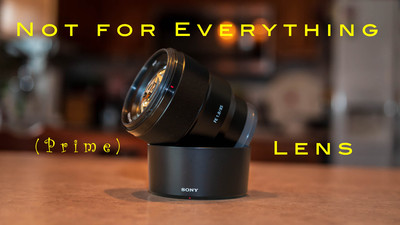
Hey Ya'll! How's it going this week? Me? Pretty good thanks for asking. This week is a continuation of last week's blog. Almost Everything Lenses .  But this week I'm talking about a great lens that isn't for everything. It's another prime lens. And again here are a few things that I really like about primes. They are usually less expensive. Of course there are exceptions but overall they are much more friendly to your wallet than a Zoom lens is. You usually can get very wide apertures with these lenses like f/1.8 or f/1.4. These lenses are smaller and more compact and lighter than Zoom lenses are. And these lenses are usually very sharp.  Prime lenses make you shoot with a purpose and intention. The mighty 85mm.

The 85mm is a short telephoto lens. Much shorter than its longer cousin the 135mm. Being a telephoto
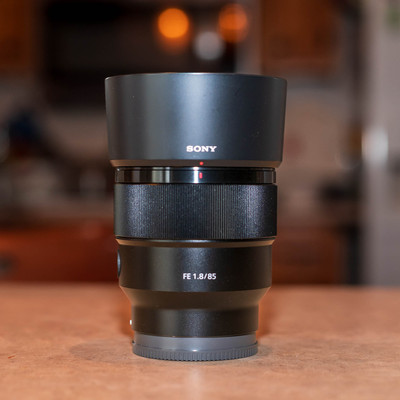
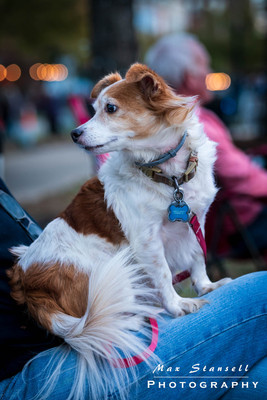
even though a short one it can compress a scene bringing things in background closer. This lens is a portrait powerhouse. It can give a flattering perspective of faces and is considered the king in portrait primes. With wide apertures and being a telephoto you can create some creamy bokeh. ( blurry background) The eyes of your subject can be tack sharp and ears starting to blur which really brings your attention to the eyes. The shallow depth of field you can create really separates your subject from noisy backgrounds. You won't be as close as you would with a 35mm or 50mm. You have to give the subject some space which may make them more comfortable. With this lens you can get single and maybe some couple portraits but this lens is not for groups shots. This lens can be used for street but not for tight shots you might have to be across the street which might work for some folks. This is more a specialty lens can be used for specific situations. It won't ride in your bag unless you are a portrait photographer. I have had a few of theses lenses in the f/1.8 maximum aperture and they were great! I had a Nikon version that I sold when I changed to Sony and one of the first prime lenses I got was the 85mm f/1.8. When I do portraits of friends or family this lens is on my camera. This lens is not normally a Landscape lens but can be used for isolating parts of a landscape but I would use a zoom for that most of the time. Although I don't use this lens often it will never be out of my lineup of lenses . I will always have an 85. These lenses are relatively inexpensive especially in the f/1.8 maximum aperture. If you go wider than that the price really goes up also. For new lenses the f/1.8 versions I've seen prices in the 200's dollars for third party to 600 for my Sony. Of course if you buy used you could get cheaper and that may be the route I would go for the best quality at the best price.

For me the 85mm is one of the funnest lenses to shoot. Although I don't use it often I just love taking it out to shoot some portraits. So if you shoot portraits this prime should be in your kit. Until next week " Get out and Shoot!" 

Hey if you want to check out my photography go to my instagram account Max Stansell Photography there are over 2000 posts there. Here is the link

 Max Stansell Photography Instagram Link


Almost Everything Lenses #402

April 03, 2026  •  Leave a Comment

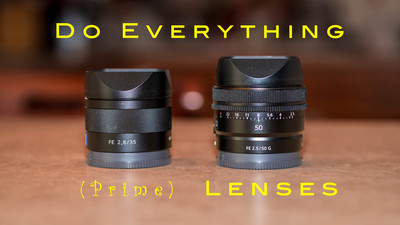
Hey Everyone! Hope you've had a good week. This is a blog that closely follows a blog about shooting one focal length I did a couple of weeks ago. Here's the link.  One Focal Length Challenge. This blog is about lenses that can do almost anything that are primes. Not only are they practical and creative but can be used for Portraits, Landscapes and Street photography. Almost everything. Almost Goldilocks lenses. Just right! Here are a few things that I really like about primes. They are usually less expensive. Of course there are exceptions but overall they are much more friendly to your wallet than a Zoom lens is. You usually can get very wide apertures with these lenses like f/1.8 or f/1.4. These lenses
are smaller and more compact and lighter than Zoom lenses are. And these lenses are usually very sharp.  Prime lenses make you shoot with a purpose and intention. It makes you look at your scene with a more creative eye. Which is good! You're not just pointing zooming and shooting. You're thinking. Now when I say 35mm or 50mm I mean full frame sensor sized cameras. For crop sensor cameras it will be a 23mm or a 35mm respectively. So let's start with one of the most popular prime lenses the 35mm.

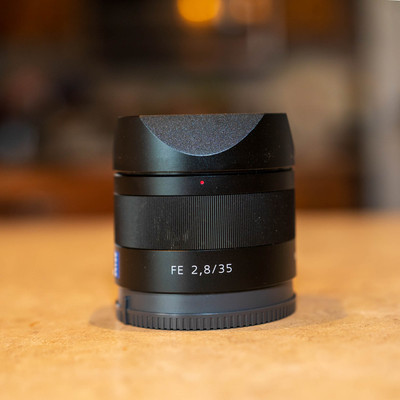
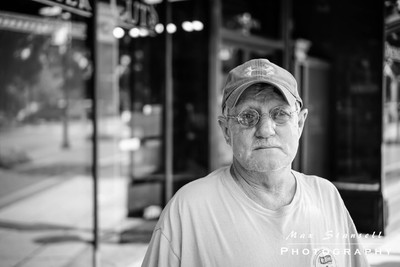
35mm- The 35mm almost has a Legendary status among street and travel photographers. It truly has that Goldilocks feel to it. Is not too tight when shooting and it's not too wide either . It's in a sweet spot. It is said that the 50mm is closest to the normal eye perspective. The 35mm is a normal eye's peripheral vision.  It's wide enough that you could use it for many Landscape shots. It is super for environmental portraits. It lets the background in your shot. So when you take a portrait of someone you also can get the environment that they are in. Instead of just getting a portrait of the butcher you also get him working in his butcher shop. With a 35mm you have to get a little closer to your subject when you shoot which takes some practice . The small size of this lens make it not so intimidating to your subject that makes it great for street photography. Many camera's that have fixed lenses that are on the market now like the Fuji X100 series come with a lens that mimics the 35mm. This lens is not great for tight headshot portraits but more environmental  shots. Great for like candid shots at a wedding where you get folks talking at a table or dancing. You can get them in the environment. This focal length is so popular it does tend to be a little bit more pricey than the next lens I'm going to talk about the 50mm.

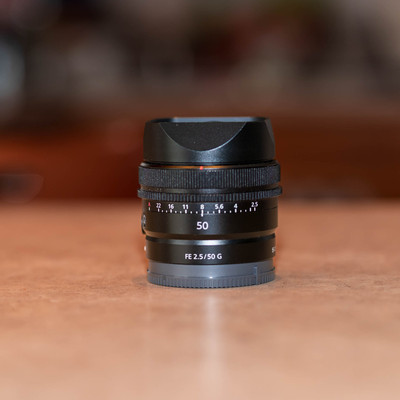
50mm- This lens known as the "Nifty Fifty" Is one of the most affordable lenses you can purchase as a photographer. To me I can almost shoot everything with it. In the film days when you bought a camera it came with a 50mm lens. Usually a f/1.4 or a f/1.8. Most of us shot with this combo for a couple of years before we got another lens. So old-timers like myself really like the look of a 50mm. This lens like I mentioned before is the closest to your normal eye perspective. This makes it easy to frame and shoot because it's just as you saw it. This lens is a great portrait lens. You can get great headshots of folks and it gives a more natural look than say the 35. If you get too close with a 35 things tend to get a little distorted like Noses tend to get larger. But not the 50. It is great for street but you will have to step back a little if you want that environmental shot like the 35. Really the difference between the 35 and 50 is where you are to your subject. If you are in tight spots the 35 would be better but if you have some room I would say the 50 is better. You can use it for landscape and it's great for product photography as well. I love this focal length and could shoot it all day no problem. You can find these lenses new for less than 300 dollars and used even cheaper. I think every photographer should have a 50 in their kit.

You can get both of these lenses in your camera brand or 3rd party lenses. There are lots of them out there and a used one would be good also. I love going out and just taking one of these lenses with me. It cuts down the decision making process out of the picture and makes you think more about composing and being artsy. Well that's enough for me this week until next week "Get out and Shoot!" 

Hey if you want to check out my photography go to my instagram account Max Stansell Photography there are over 2000 posts there. Here is the link

 Max Stansell Photography Instagram Link


Subscribe
RSS
Archive
January February March April May June July August (4) September (4) October (5) November (4) December (3)
January (5) February (4) March April (2) May (1) June July August September October November (3) December (2)
January February March April May June July August (1) September (1) October (1) November (1) December (1)
January (1) February March April May June July August September October (3) November (2) December